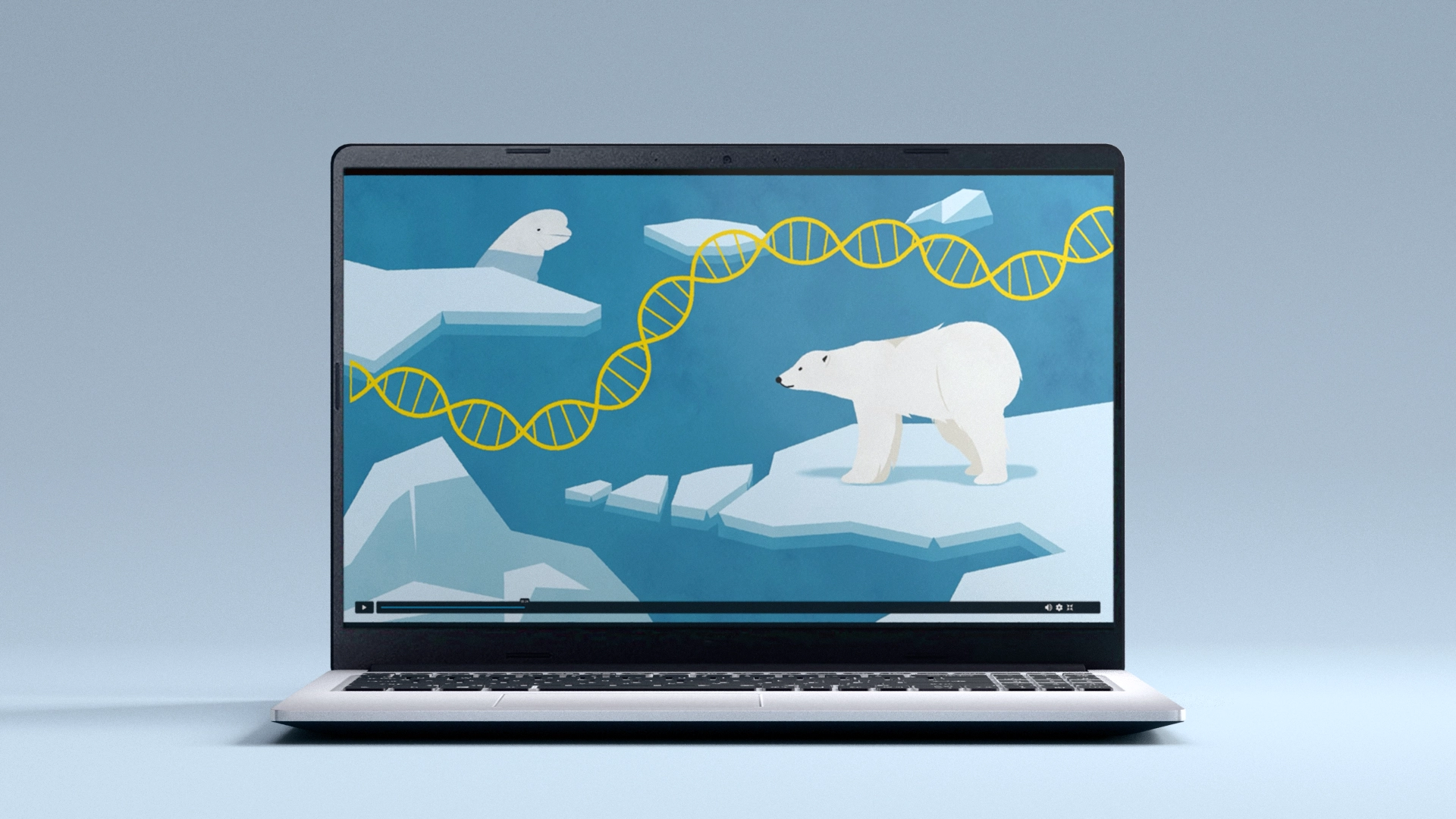
External link to video prototype.
The Canadian BioGenome Project (CBP) is the Canadian branch of the international Earth BioGenome Project, an initiative aiming to sequence the genomes of all eukaryotic life. Canada is home to over 80,000 animal and plant species, living in diverse environments ranging from the desert to the arctic. Sequencing their genomes to create reference genomes—representitive copies of their genomes that can be used as a baseline for future studies—can be used to inform conservation efforts and drive innovation.
Much of the CBP’s current outreach is focused on genomics experts in academic settings. We created this prototype video to help the CBP reach a broader audience of scientists who are not genomics experts—scientists who are in the fields such as biology or ecology and would be interested in reference genomes—but may not be aware of the CBP and their work. We use engaging animations and an easy-to-follow script to inspire the audience to follow and engage with their initiative.
Illustrator・After Effects・Premiere Pro

This project was developed collaboratively as part of the University of British Columbia's Biomedical Visualization and Communications program.My roles in this project included:
To start off the project, we spoke with the client to gain a better understanding of their goals. The main objective was to increase awareness and engagement of project among scientists who were not genomics experts, but who may be interested in utilizing or learning more about reference genomes. A secondary objective was to highlight the importance of the project through showing its nation-wide scale and key applications for reference genomes. Finally, we also needed to include a basic explanation of what reference genomes are, as not all scientists may be well-versed in genomics.
The script was developed collaboratively with the client over several iterations to ensure that the contents were scientifically accurate and reflected the organization’s objectives.

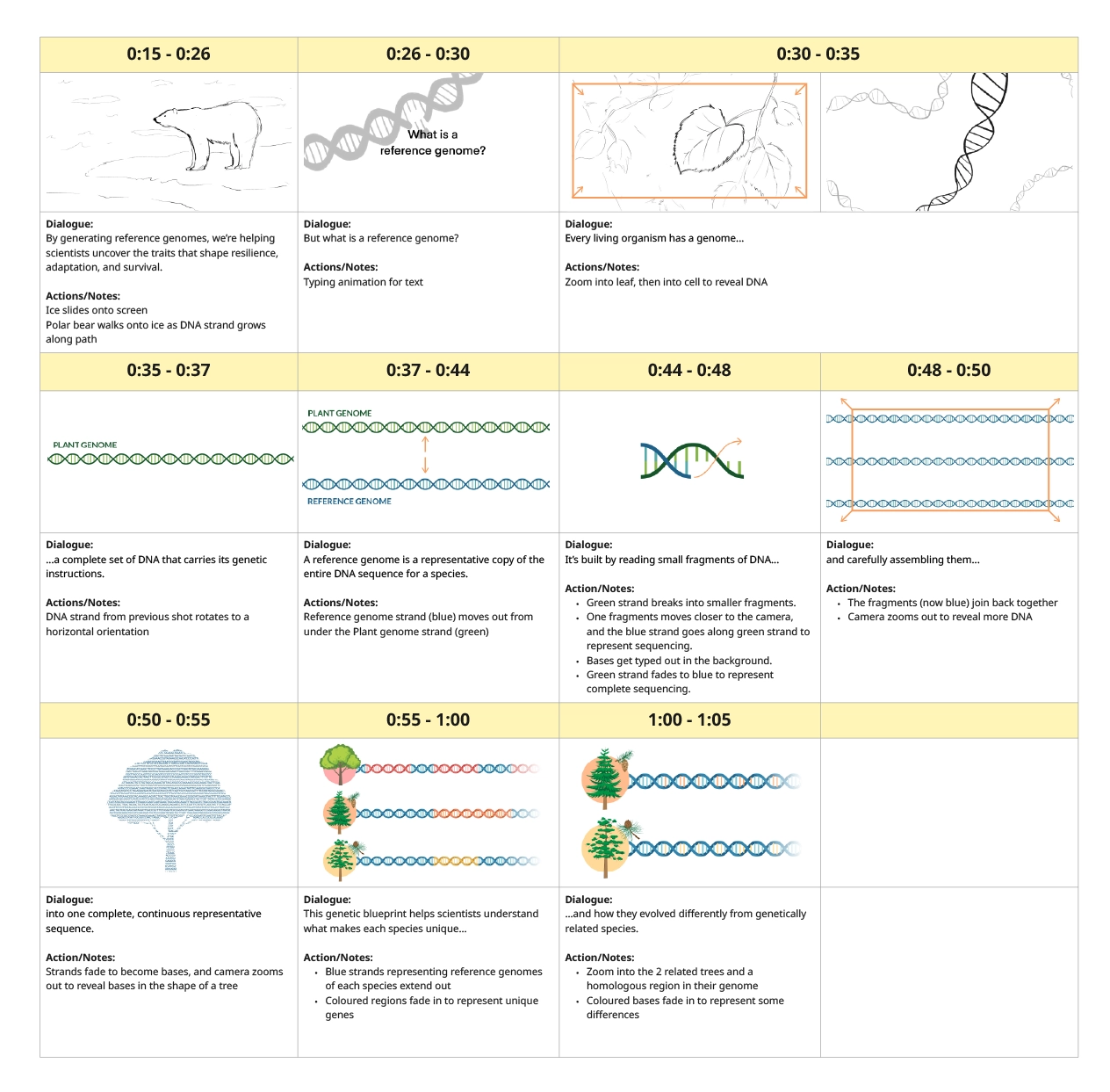
I was tasked with storyboarding the section of the video explaining what reference genomes were. As we wanted to keep the video concise and easy-to-understand for the viewer, we had decided against using extensive narration; instead, we would play to the strengths of the medium and use animation and visual storytelling to help explain the concept.
The storyboard went through several rounds of revision; at each stage, client input and feedback from user testing were used to refine the visual storytelling and improve clarity communication.
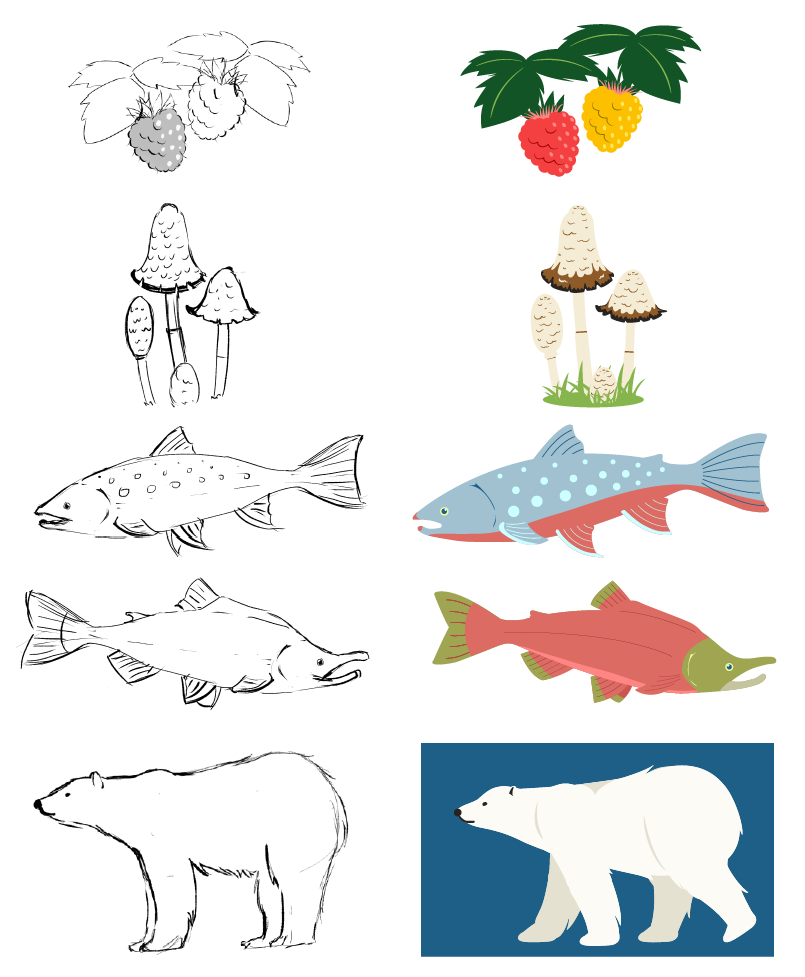
One of the main objectives of this project was to showcase the diversity of life across Canada and emphasize the nation-wide scale and importance of the CBP. We chose to do show by featuring a diverse cast of organisms in the video: we selected organisms that have been sequenced by the CBP, and that represent a range of geographic locations and taxonomical groups.
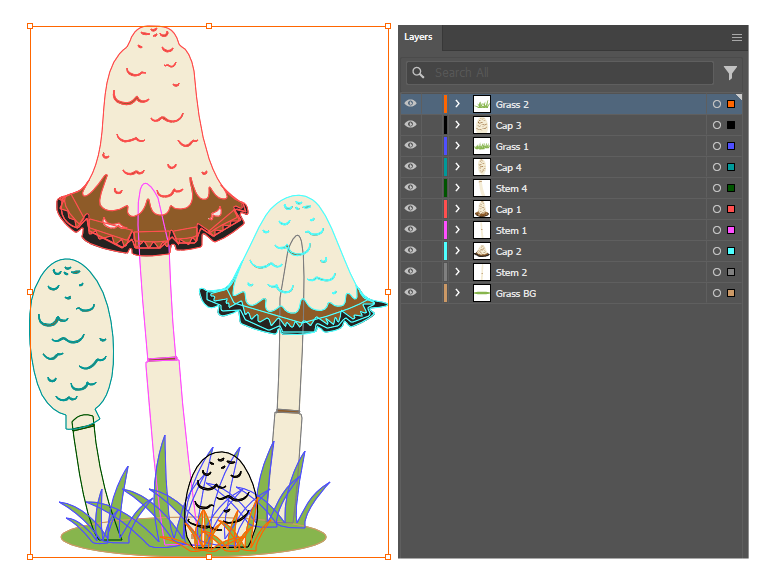
After the organisms were decided, I created several illustrations in Adobe Illustrator, making sure to prepare the layers so that the different parts of the organisms could be easily animated in Adobe After Effects.
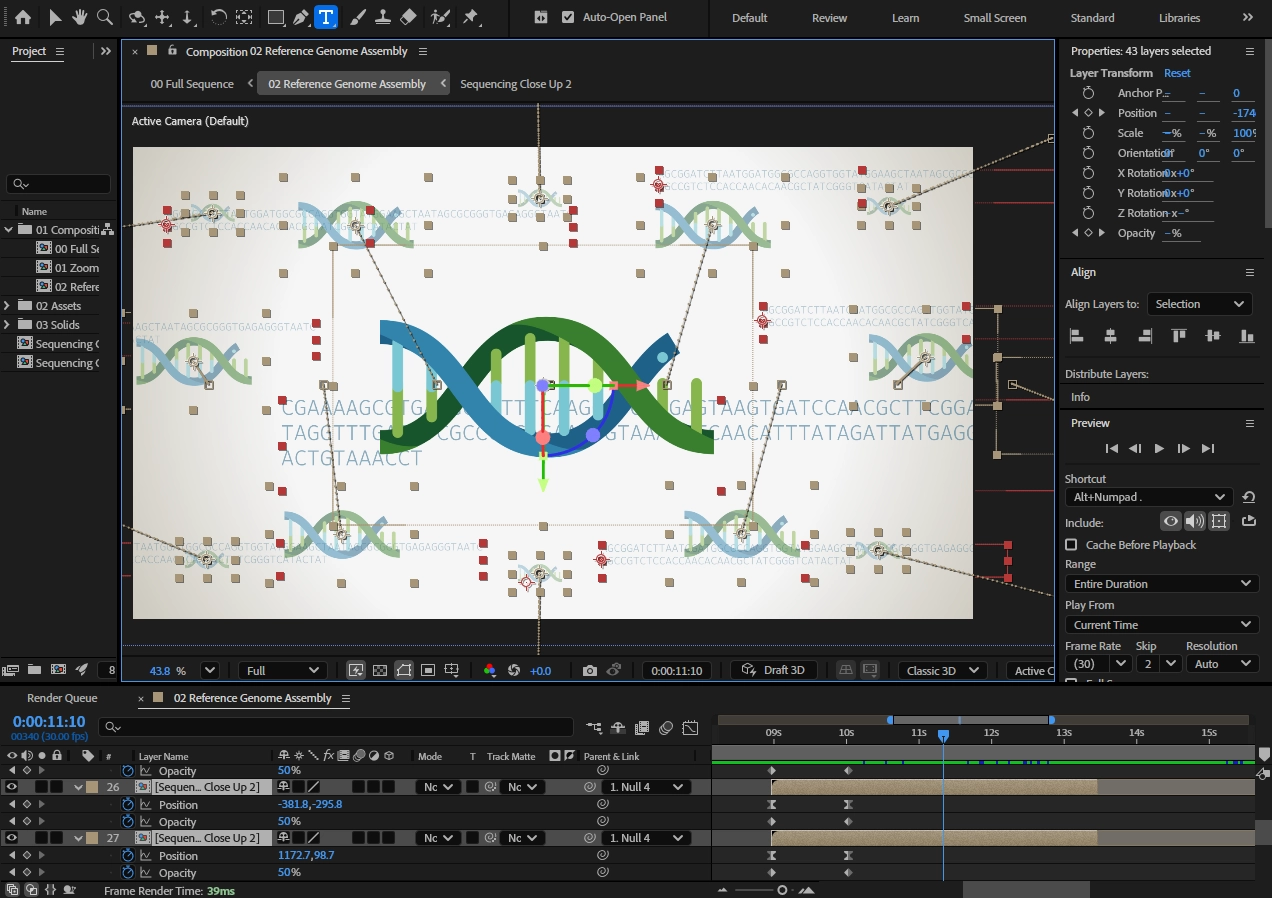
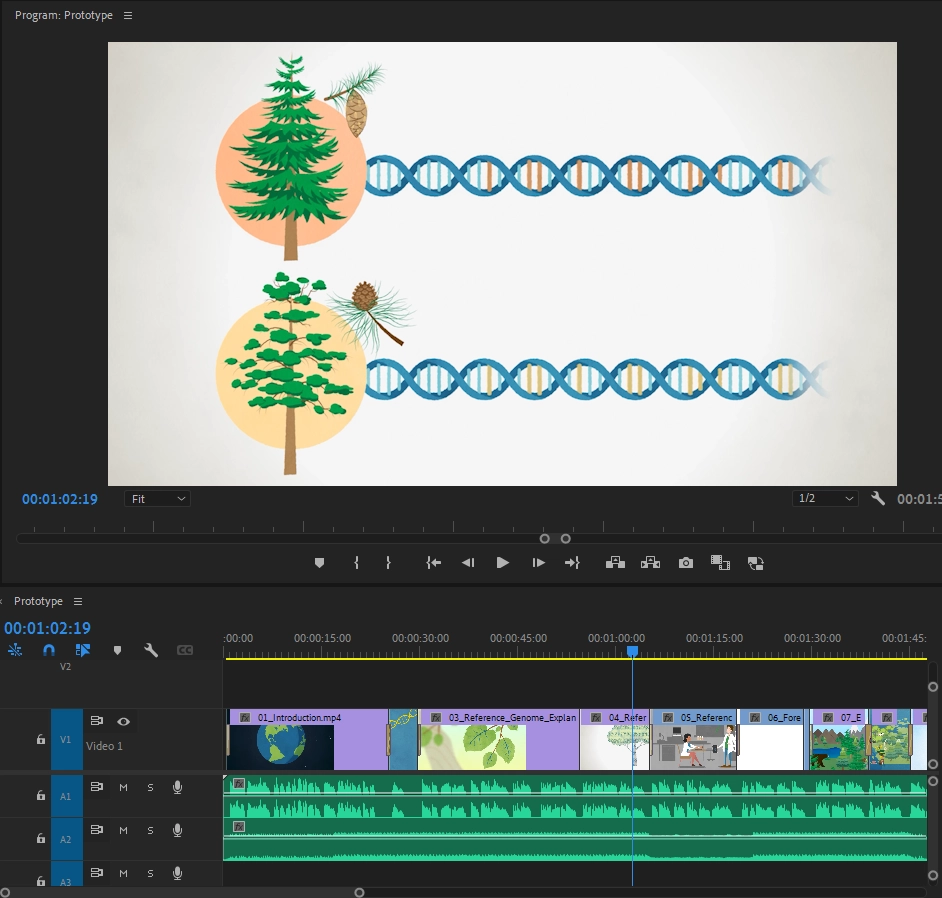
I brought assets developed by myself and other team members into After Effects to create complete scenes and animate them.
Afterwards, the clips of the scenes were combined with the music and voiceover in Adobe Premiere Pro, resulting in a cohesive final production.