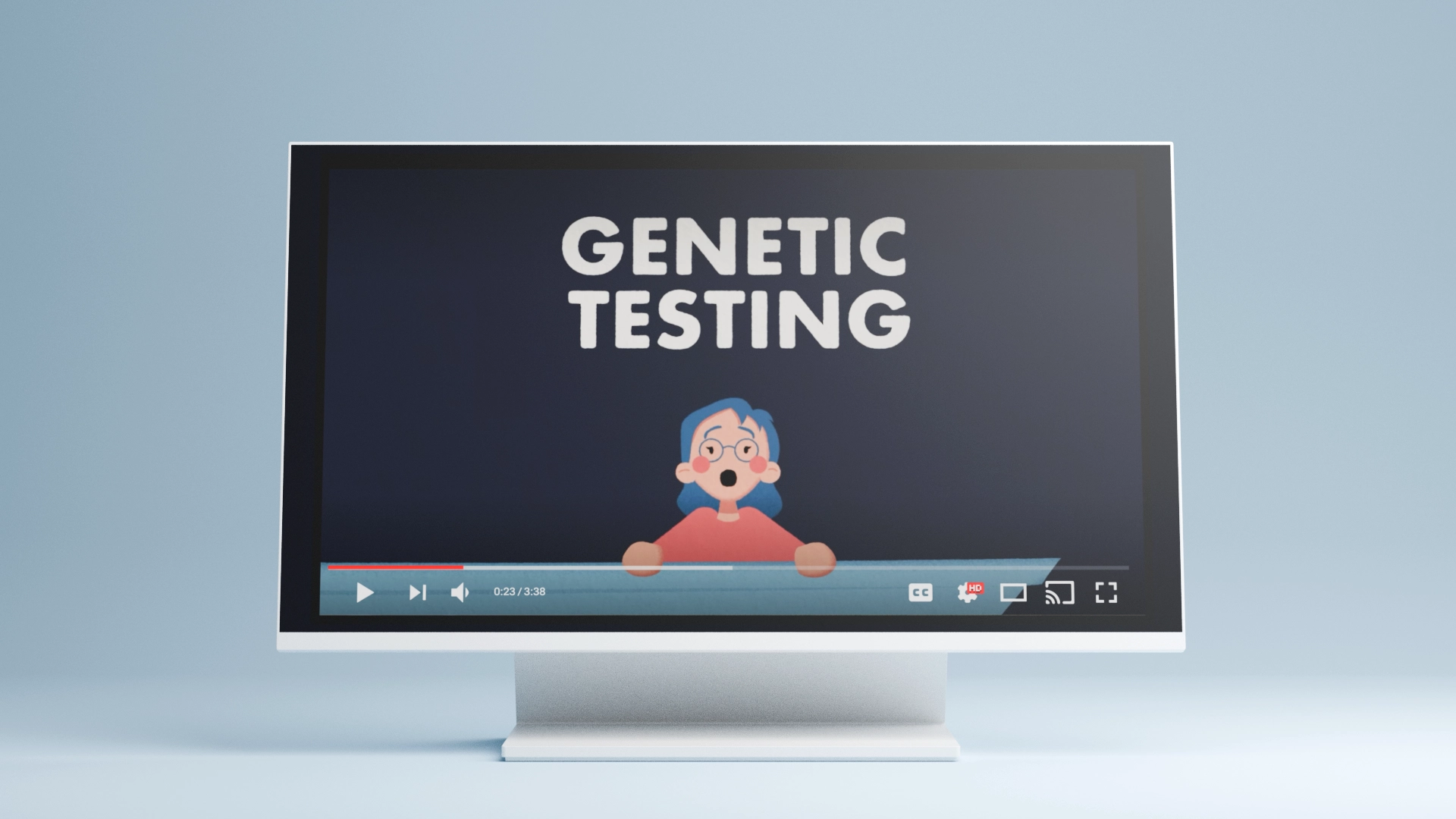
External link to video.
While genetic testing can be a powerful tool to help patients understand their conditions, patients have often expressed that they do not have a clear idea of what genetic testing involves.
Our animated video walks a patient through the process of receiving genetic testing and highlights how their genetics team will support them throughout. We utilize empathetic storytelling through visual metaphors to better help the viewers connect with and understand the material.
Illustrator・After Effects

This project was developed collaboratively as part of the University of British Columbia's Biomedical Visualization and Communications program.
My roles in this project included editing the script, recording the voiceover and mixing the audio, creating concept art and environmental assets, rigging the animated characters, and storyboarding and animating the sections from 0:00 - 0:27 and 2:14 - 2:46.
Our team started off the project by performing a preliminary environmental scan to find patient stories, health care provider experience, and general statistics regarding barriers to genetic testing. Some common themes that arose were that there is a lack of understandable and accessible educational materials. Patients express that they would like more information at the time of diagnosis and during treatment, as well as more emotional support through the process.
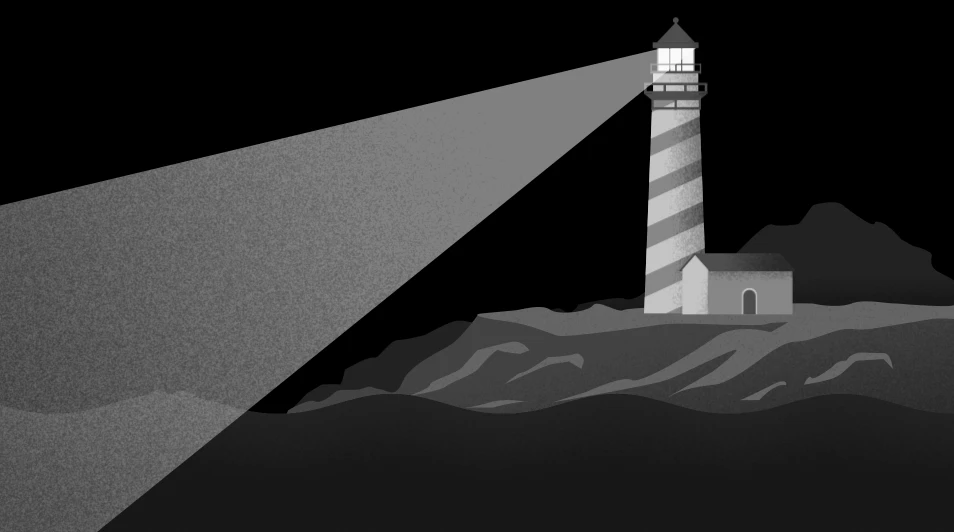
We decided to create an animation aimed at a patients receiving genetic test that guides them through the process using empathetic storytelling and visual metaphors. To tie the story together, we took inspiration from the term “diagnostic odyssey” – a term referring to the long and often difficult journey many patients with genetic diseases undergo before they receive a diagnosis – and structured the video around a central metaphor of a journey through a storm.
We drafted concept art for the characters that would appear in the story, and I also started exploring visual styles through environmental concept art.



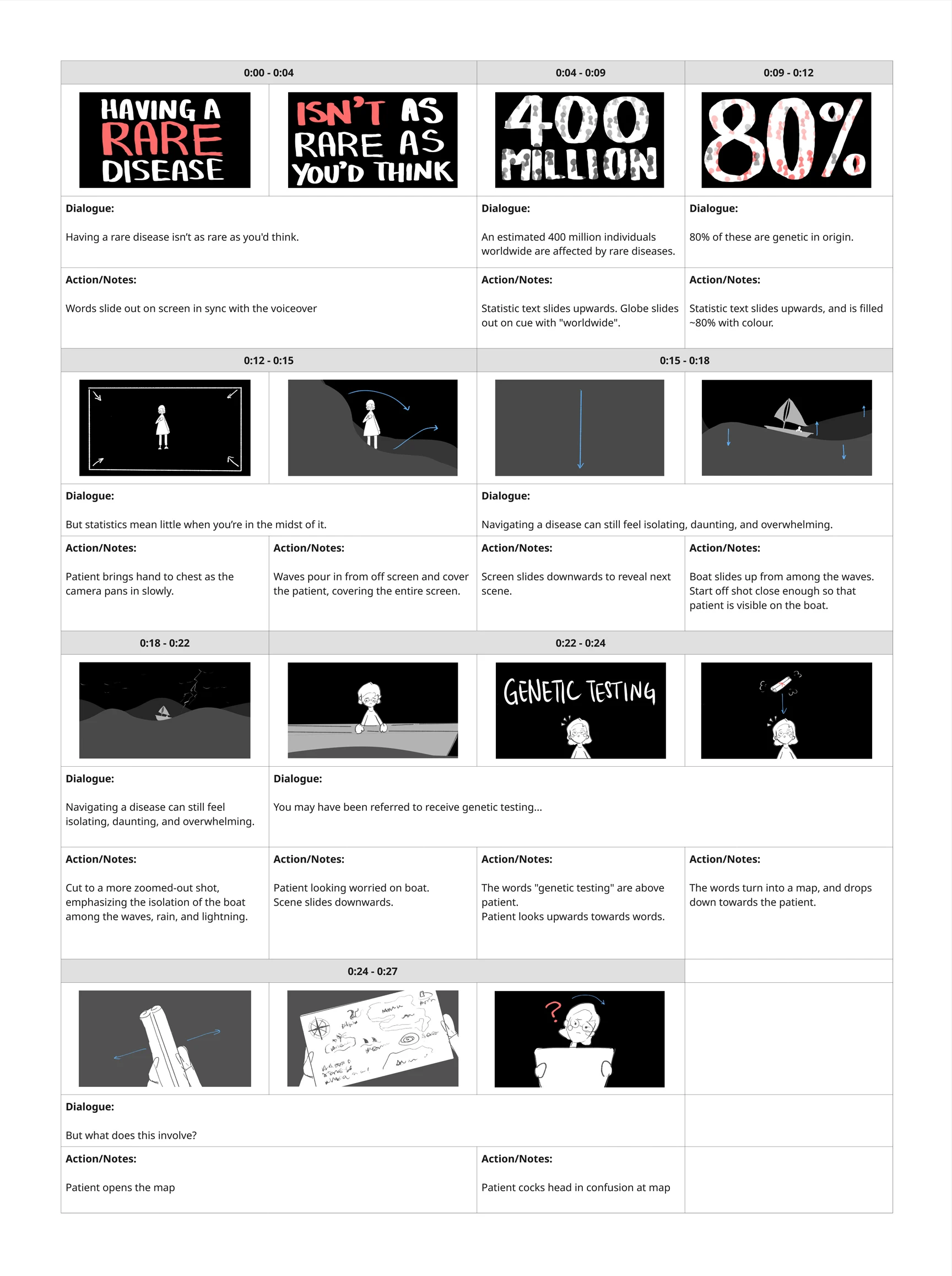
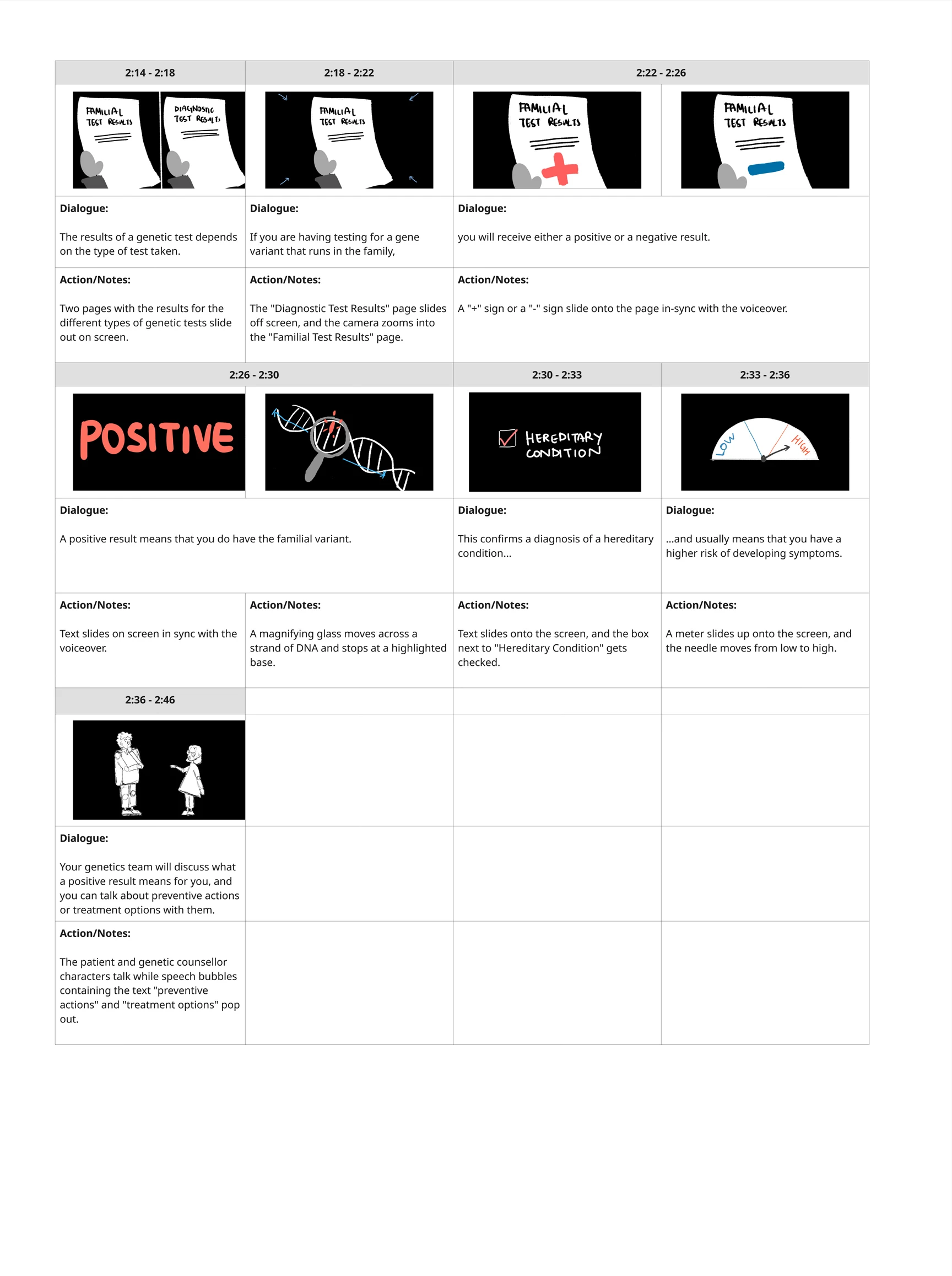
The script and storyboard were created through several iterative cycles. Each member of the team was put in charge of storyboarding a part of the script, and every member offered ideas and feedback on other sections.
User testing was performed to identify areas in the script or visuals that could be revised for clarity, and areas regarding the science that could use further elaboration. In order to further understand the gaps in communications regarding genetic testing, and to ensure the scientific accuracy of the script, we also reached out to John Silver, a certified genetic counsellor with the University Health Network and University of Toronto.
When we started developing assets as a team, we decided on several key points to ensure that the video would be visually unified:
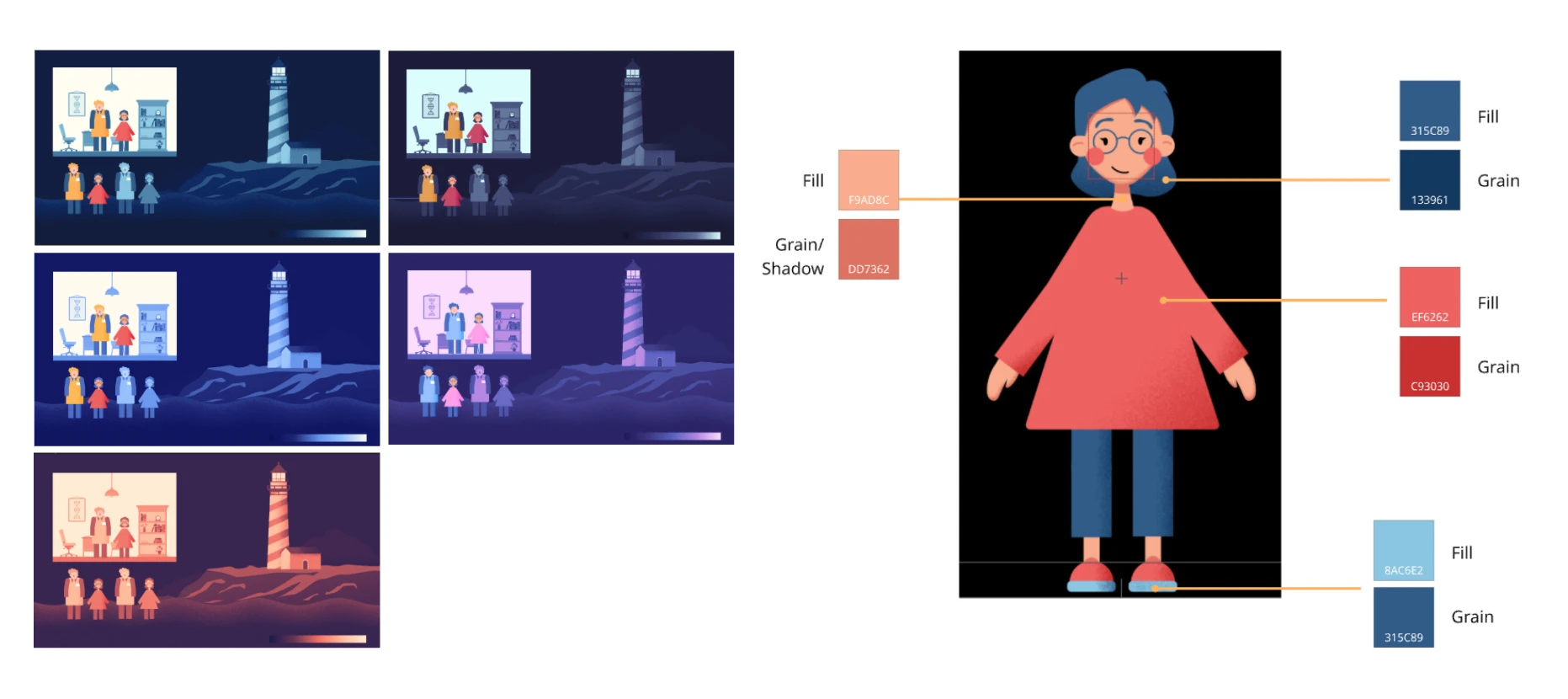
To help us select a colour palette, I prepared mock-ups with several different options. We ultimately chose to go with monotone blue/teal for our main colours to match the stormy sea imagery we have throughout the video, and chose a brighter red and yellow to use as our accent colours.
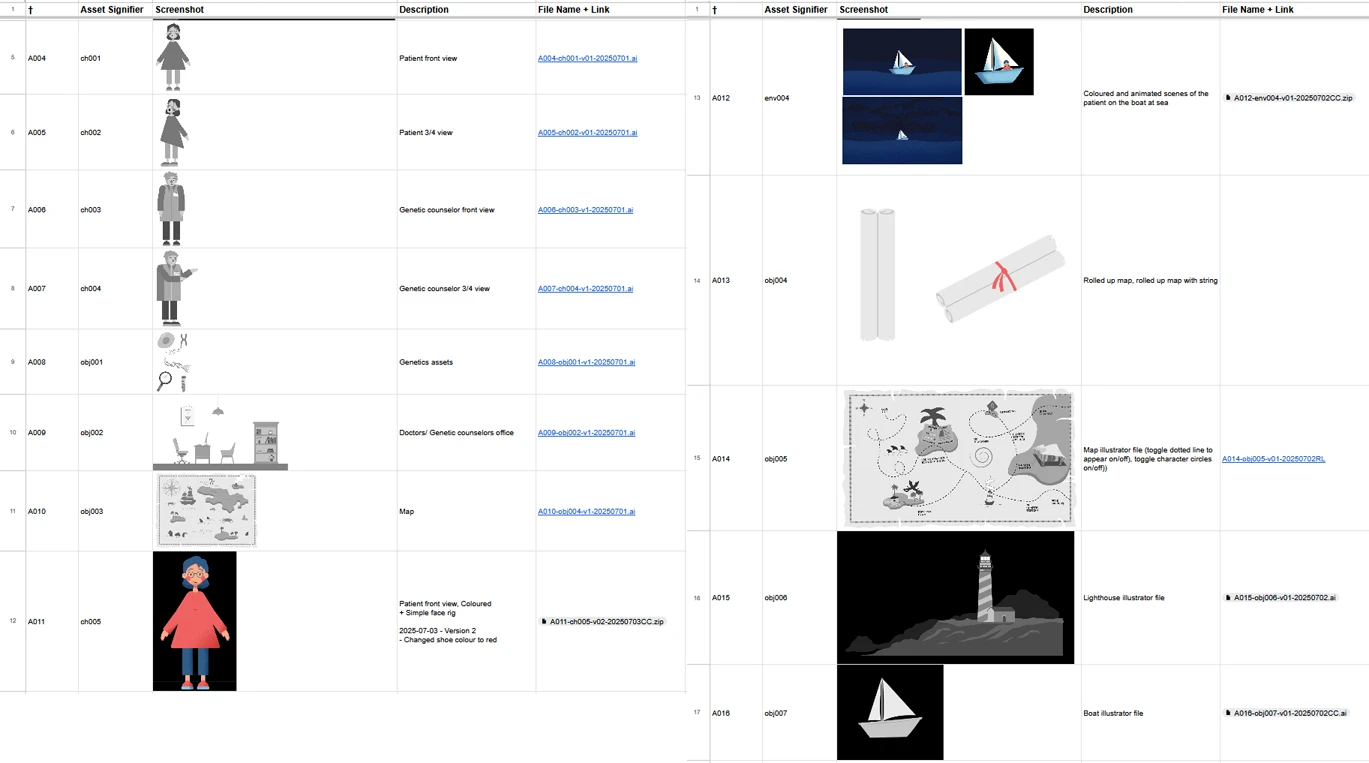
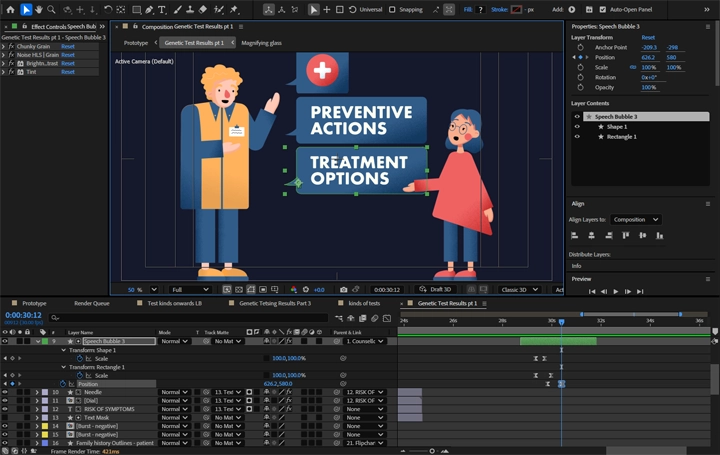
Assets were imported into Adobe After Effects and animated according to the storyboard.