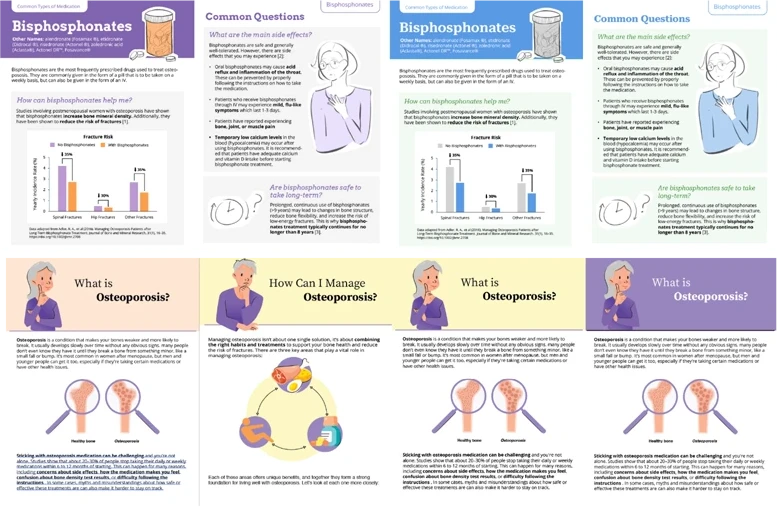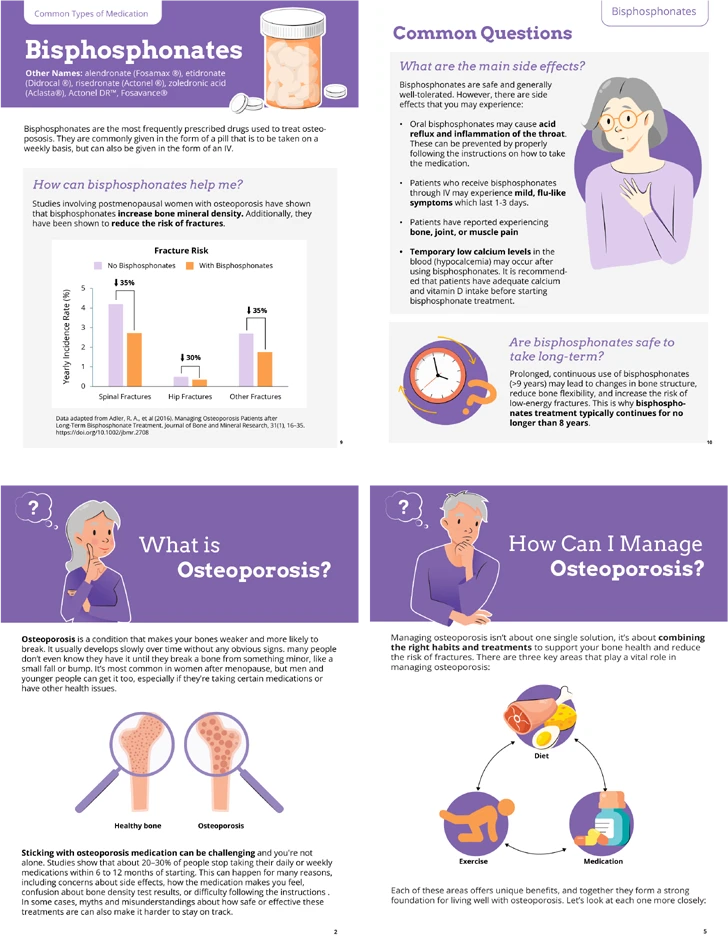
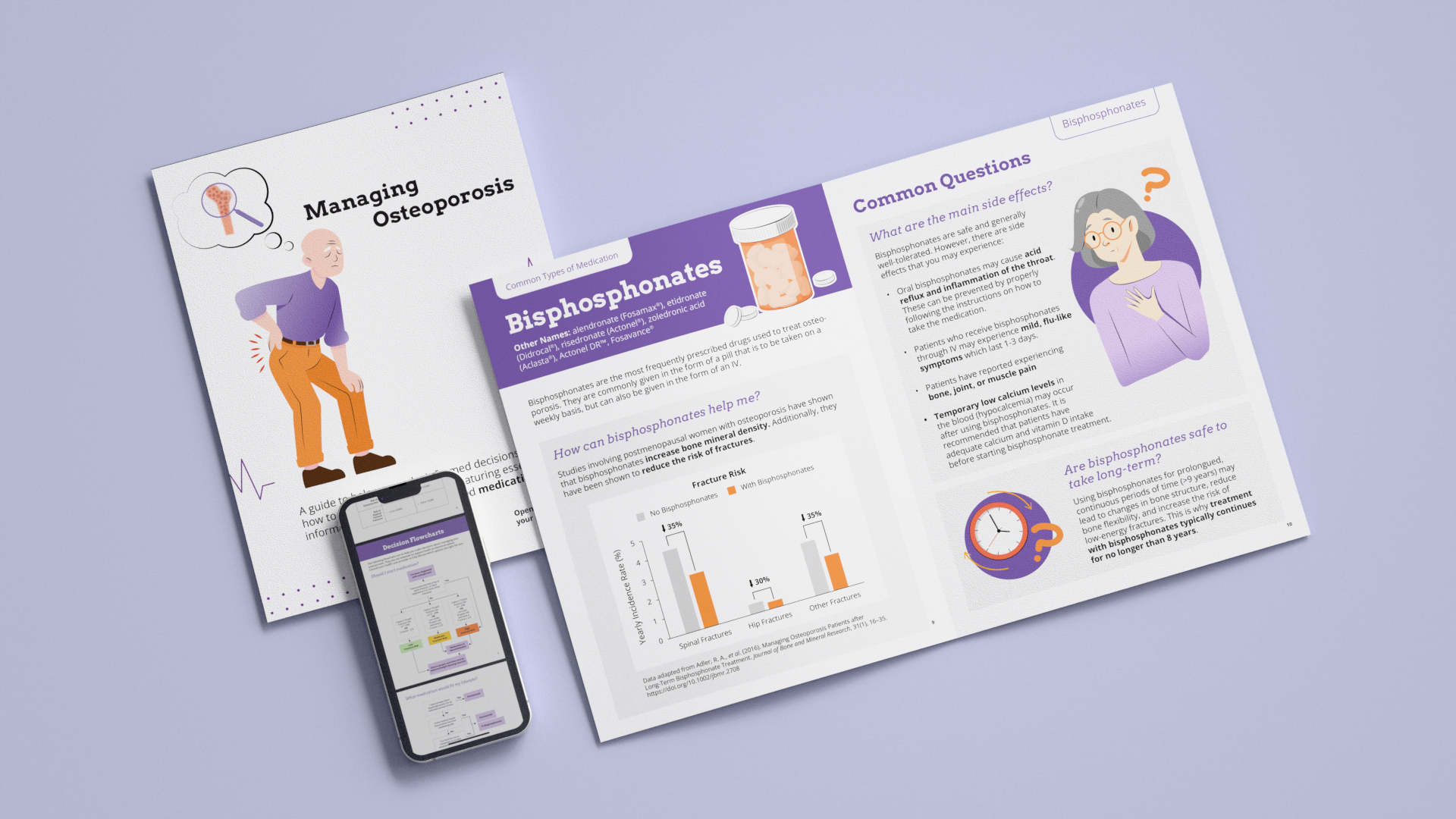
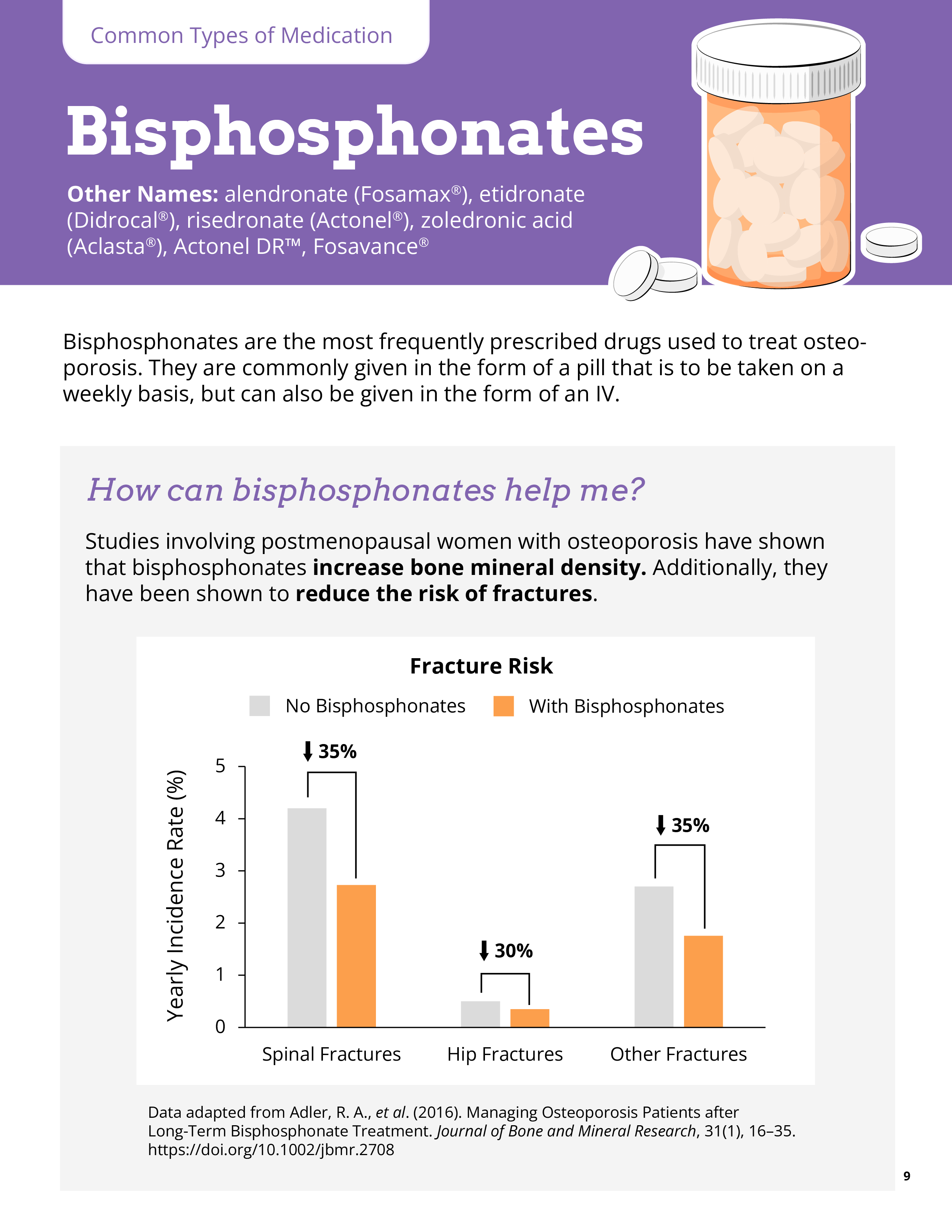
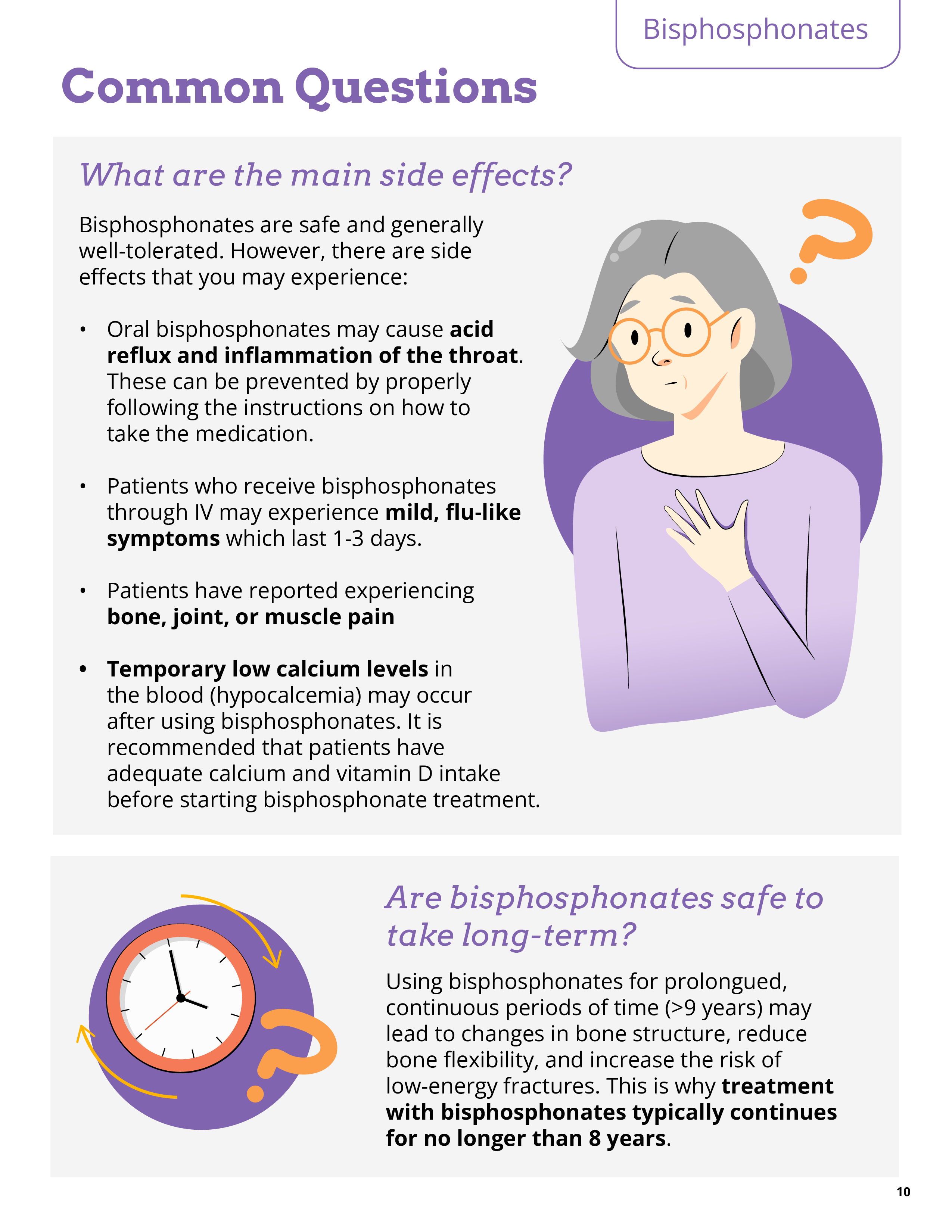
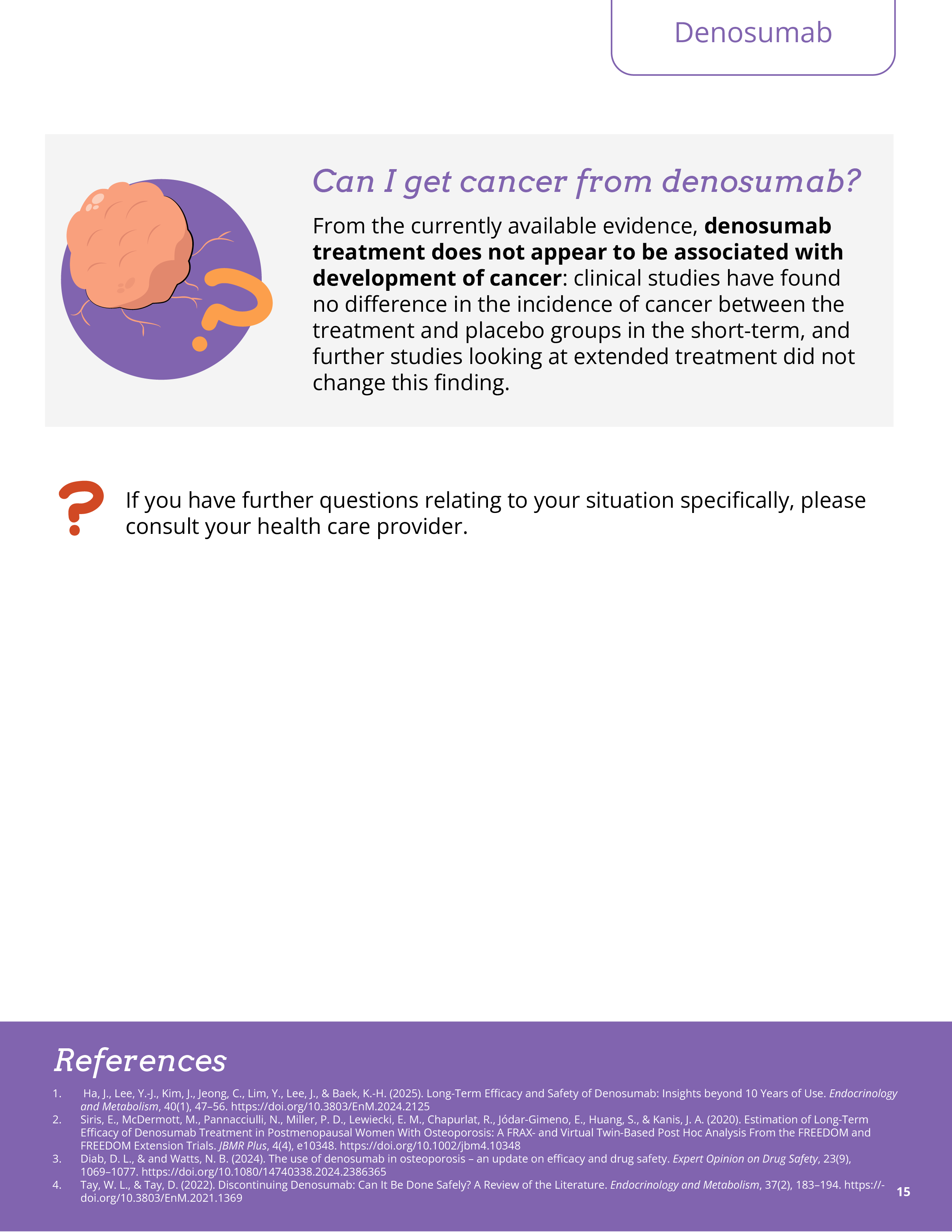
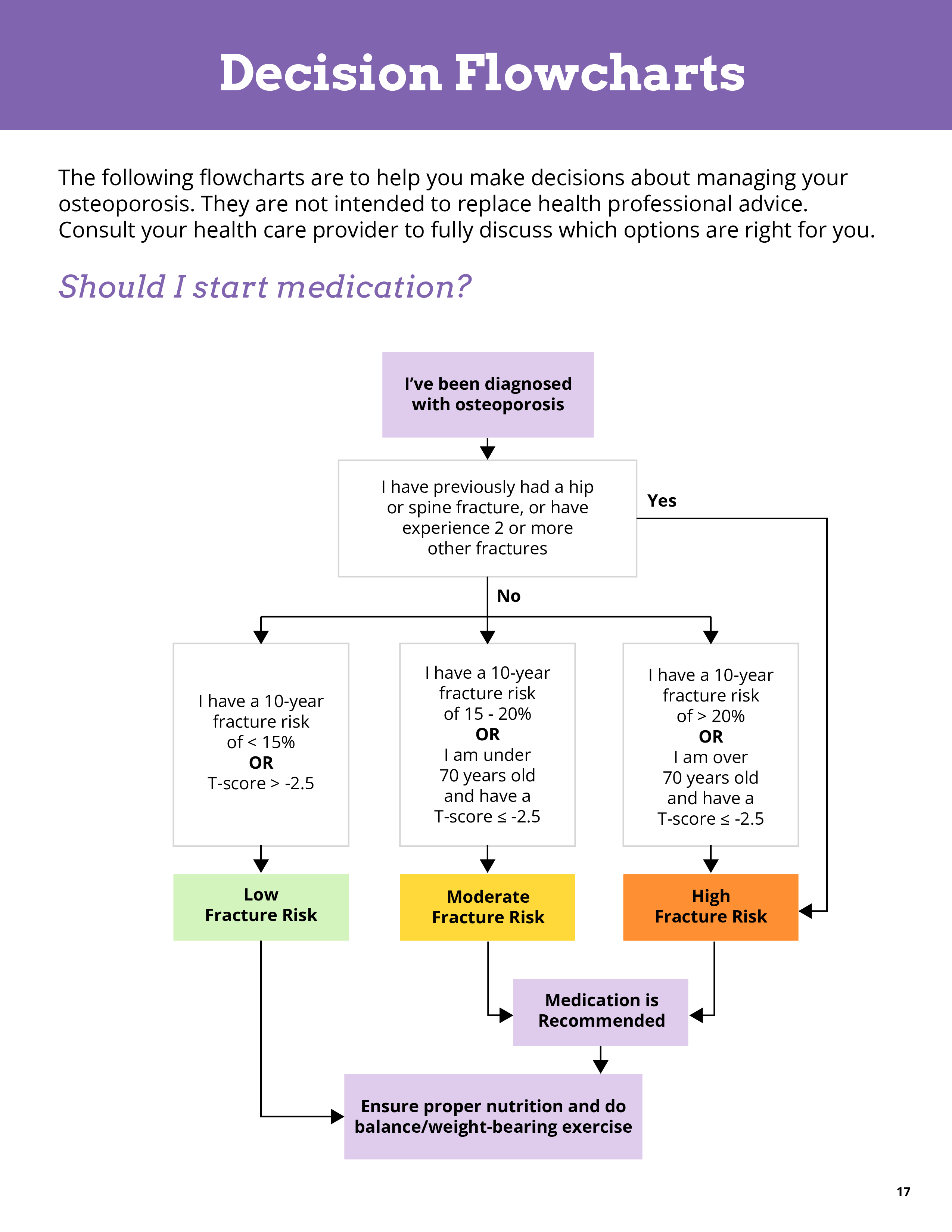
Patients with osteoporosis—especially those who have been recently diagnosed—seek clear and easy-to-understand information on navigating their condition. This concept for a printable booklet aims to help patients make confident, informed choices on their health through providing information on managing osteoporosis through diet, exercise, and medication. It includes evidence-backed answers to common concerns, and also includes a flowchart to assist patients in evaluating medication options.
The latest version of the full booklet can be viewed here.
Illustrator
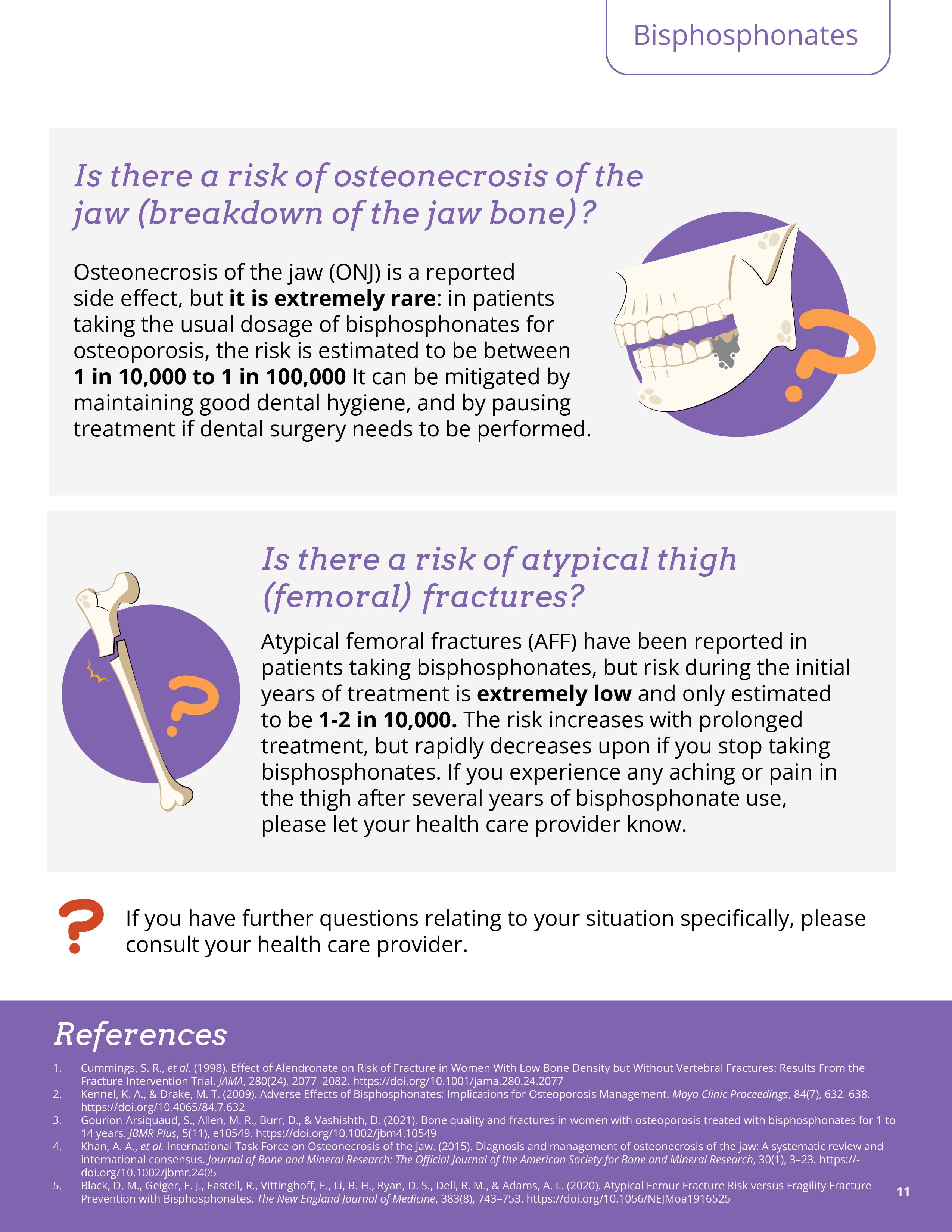
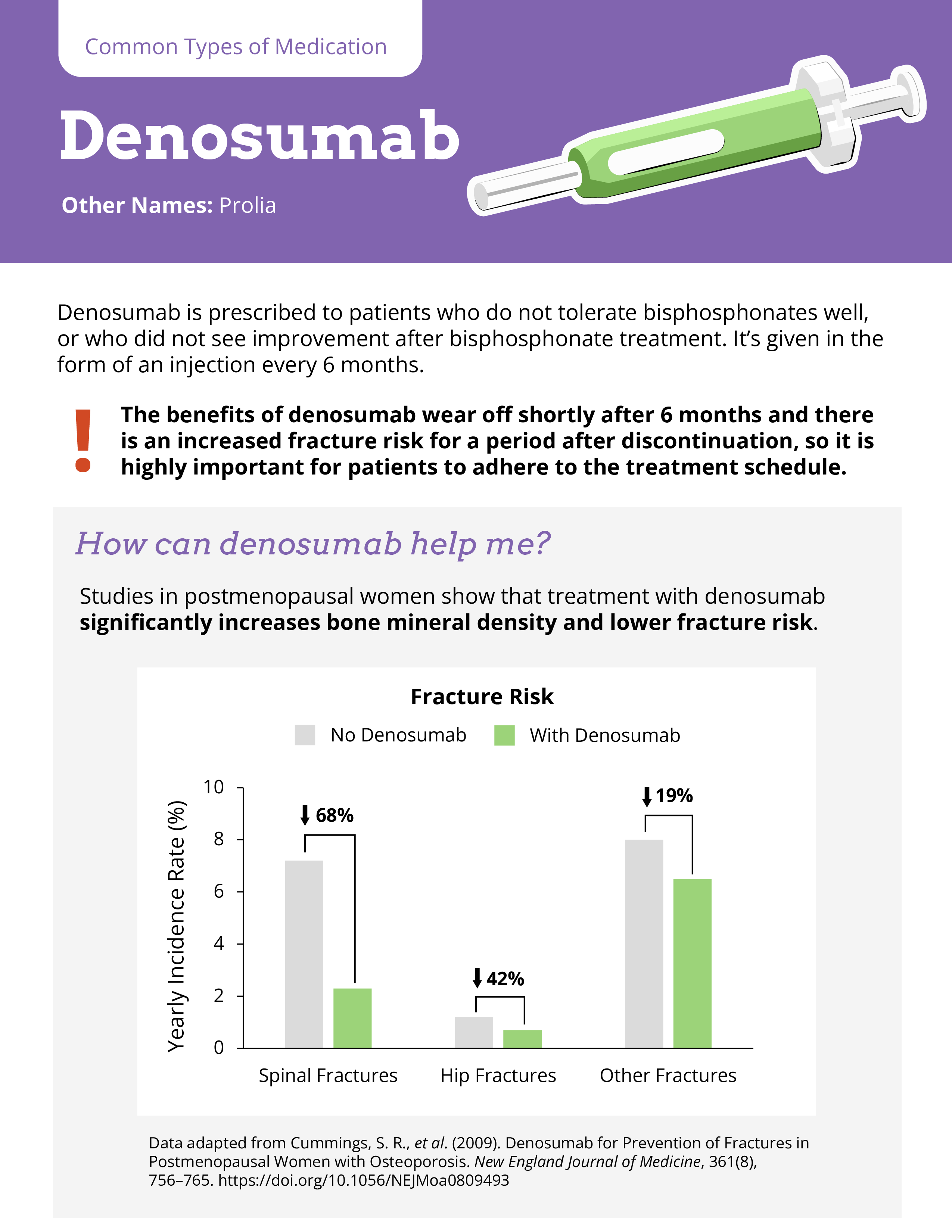
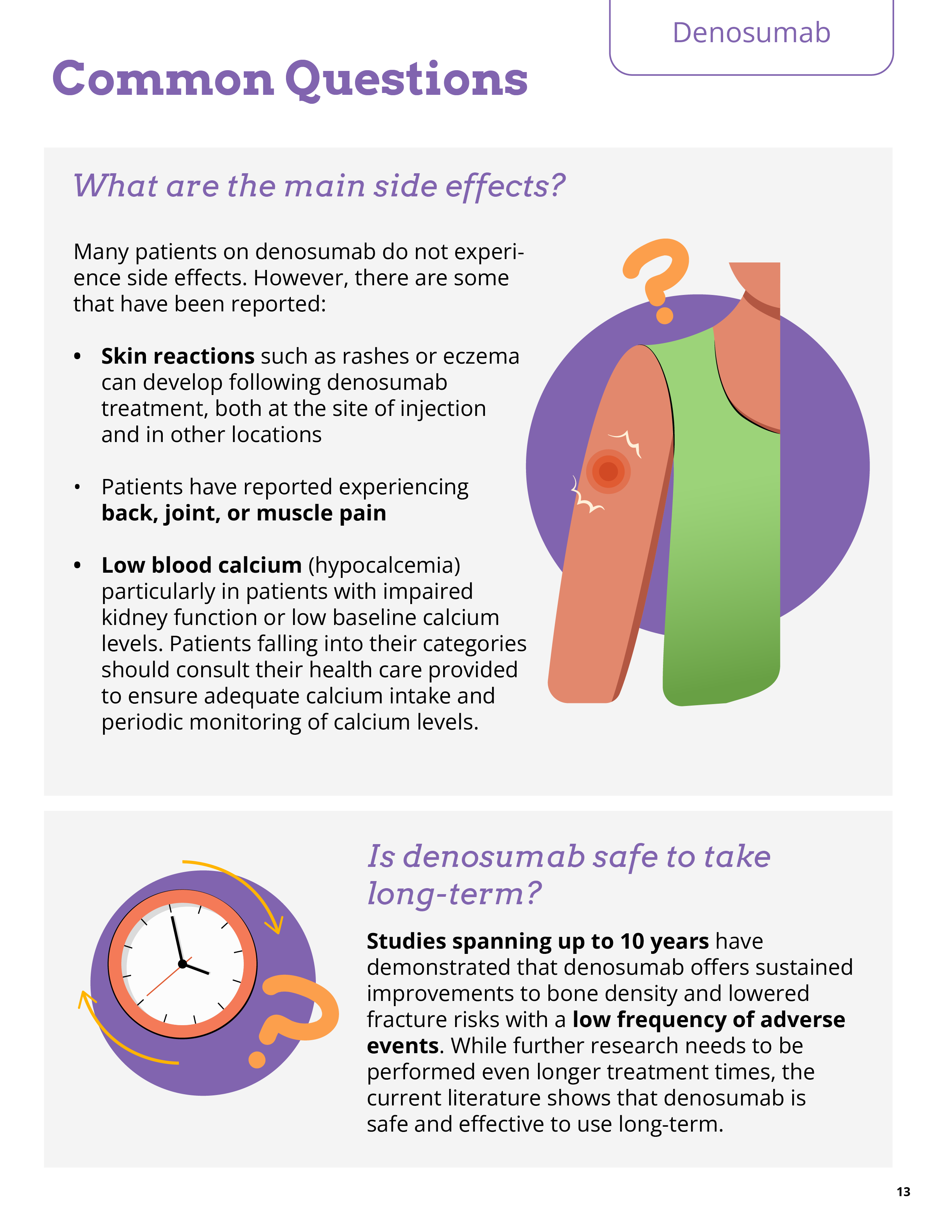
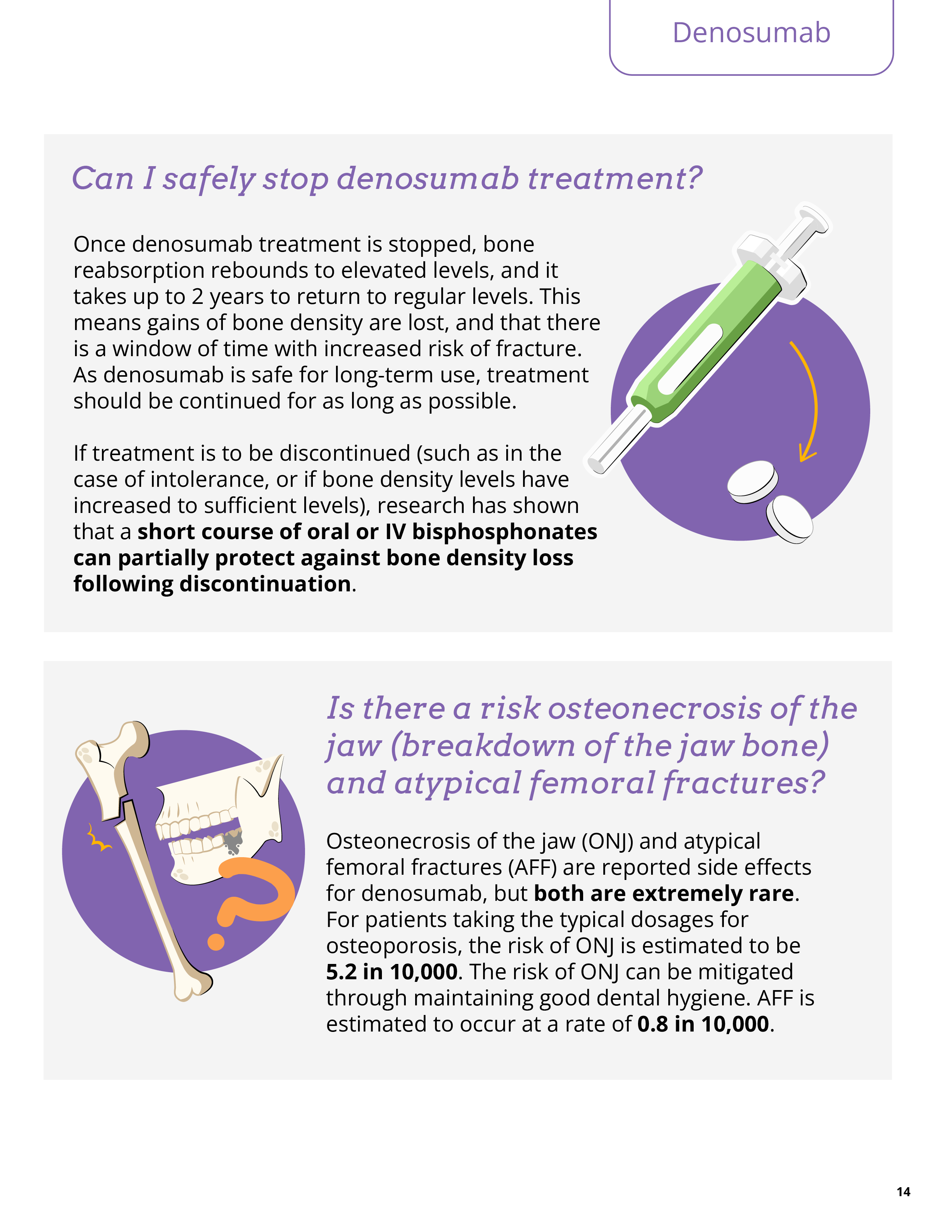

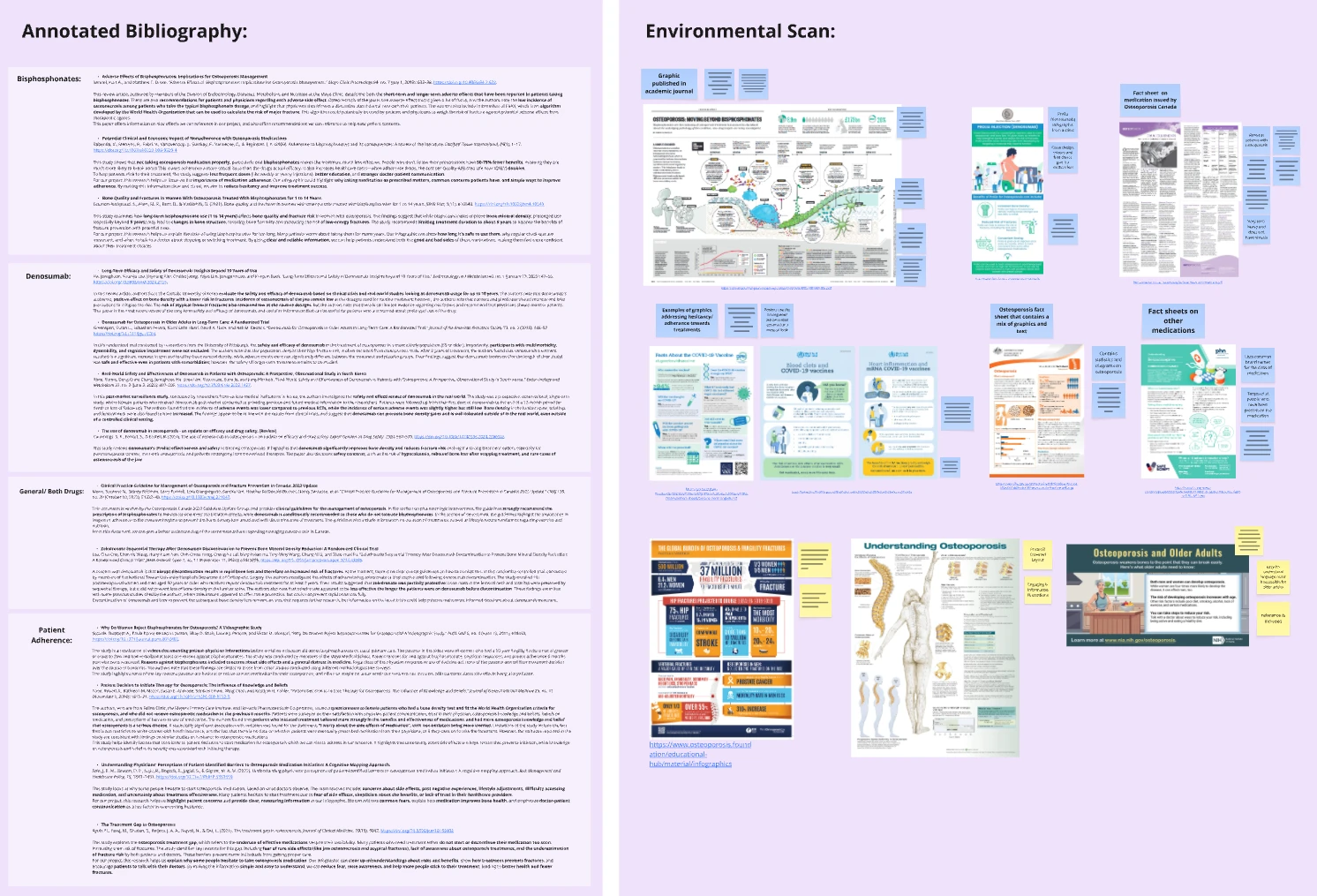
My collaborator and I started by looking at research papers, review articles, and clinical guidelines related to osteoporosis and its treatment. We also conducted an environmental scan on existing resources for osteoporosis patients, and also looked other medication-related infographics and fact sheets.
In order to understand the pain points and needs of patients with osteoporosis, we reached out to and interviewed patients about their experience with finding information related to managing their conditions. We also sent questionnaires to family physicians to gain a better idea of what information is currently provided to patients.
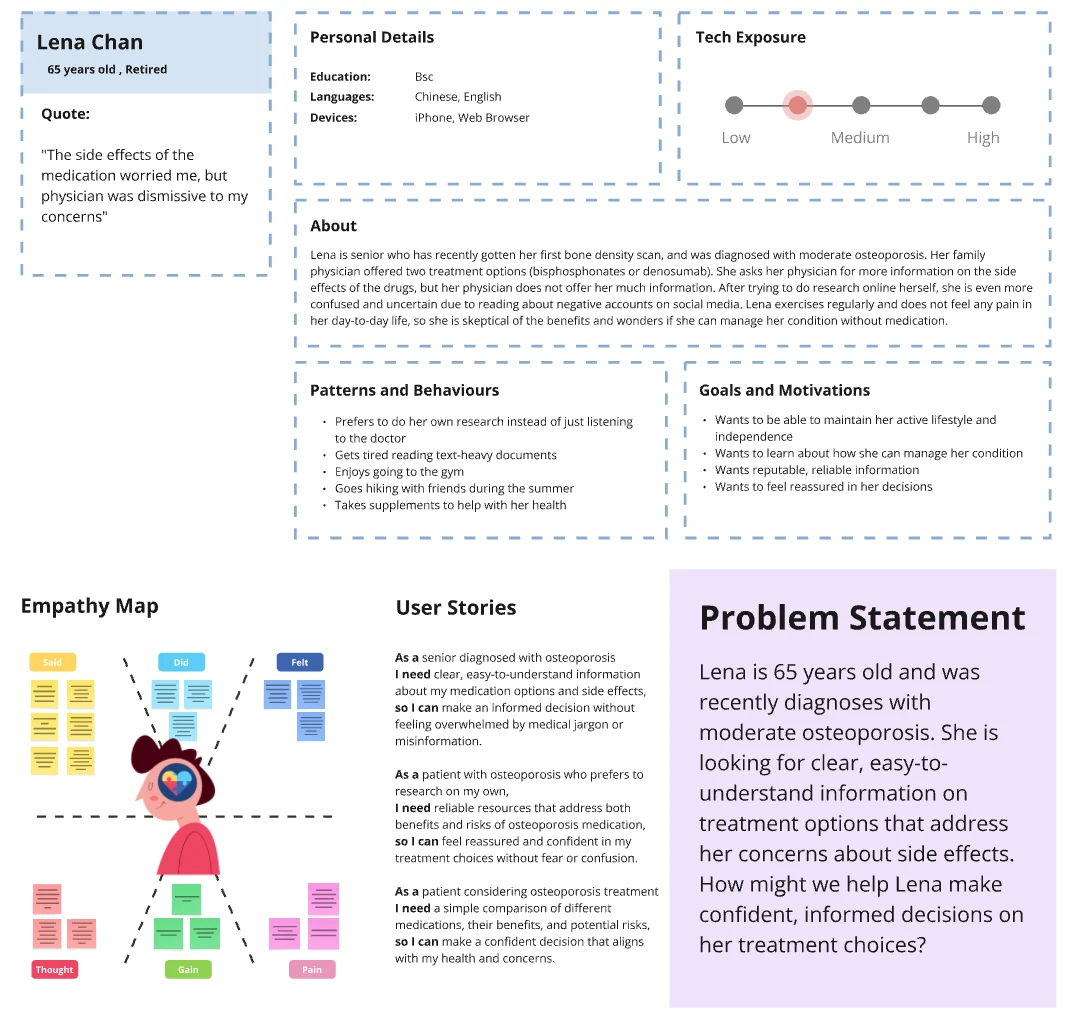
To summarize what we learned, we created a user persona and an empathy map for a patient who might use our resource.

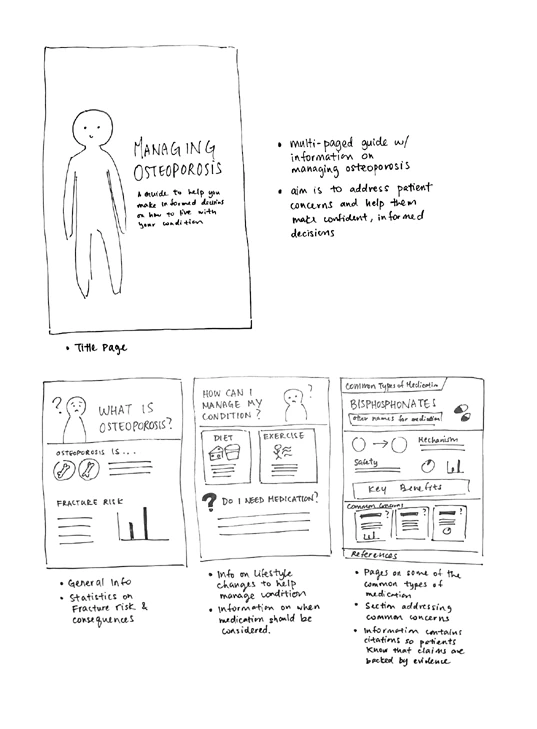
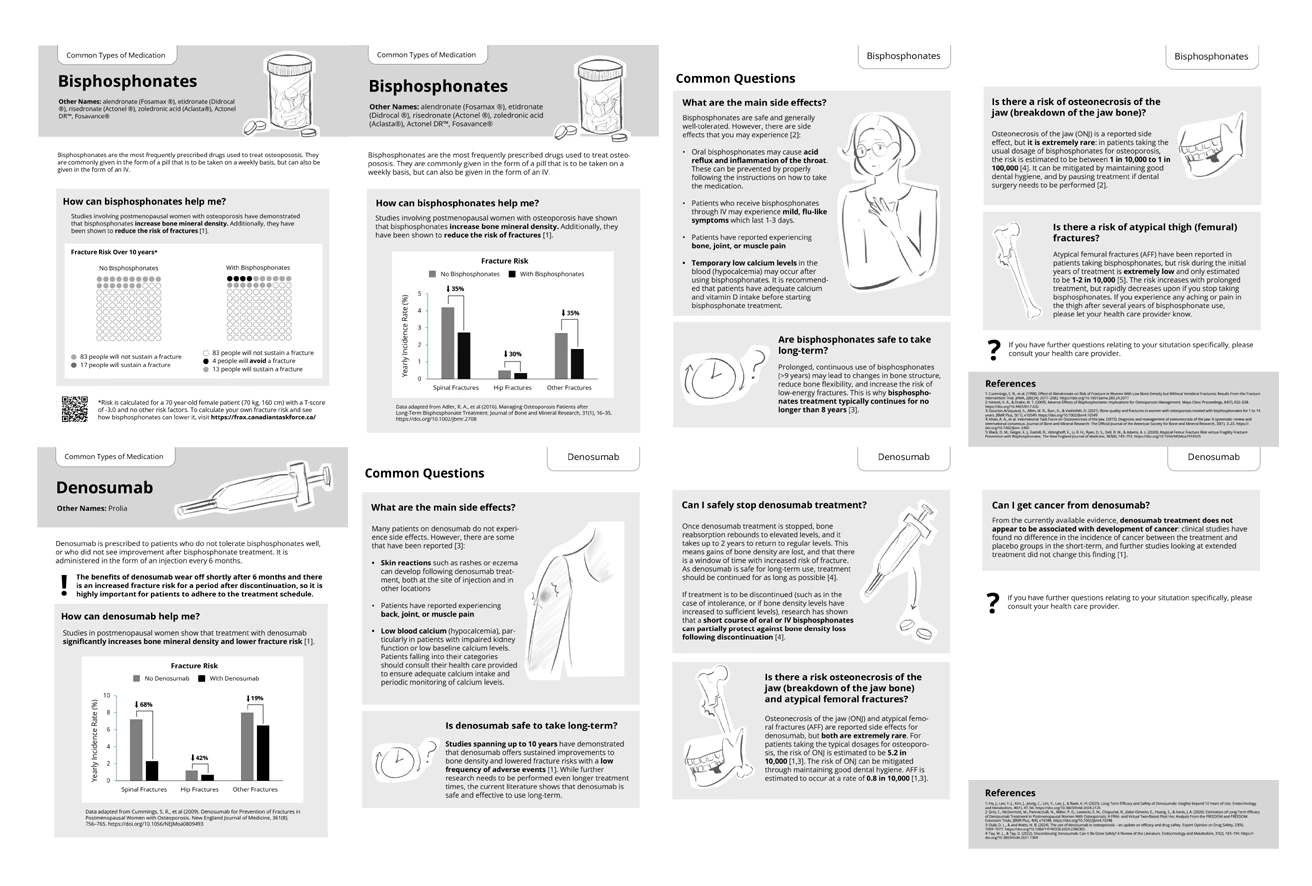
We next sketched out visuals and potential layouts for the pages of the booklet. After choosing a few designs to go ahead with, we began writing the copy text and creating black-and-white prototypes of the pages. Care was taken to choose a larger font size to ensure readability.
These prototypes were shown to the patients we interviewed as well as other potential users, and their feedback was incorporated to further refine the wording, visuals, and layout.
We created several prototypes with different colour schemes and fonts. High-contrast colours that would be readable for those with visual disabilities were chosen.
We created higher-fidelity versions of the visuals using Adobe Illustrator, and further refined the copy text and layout.